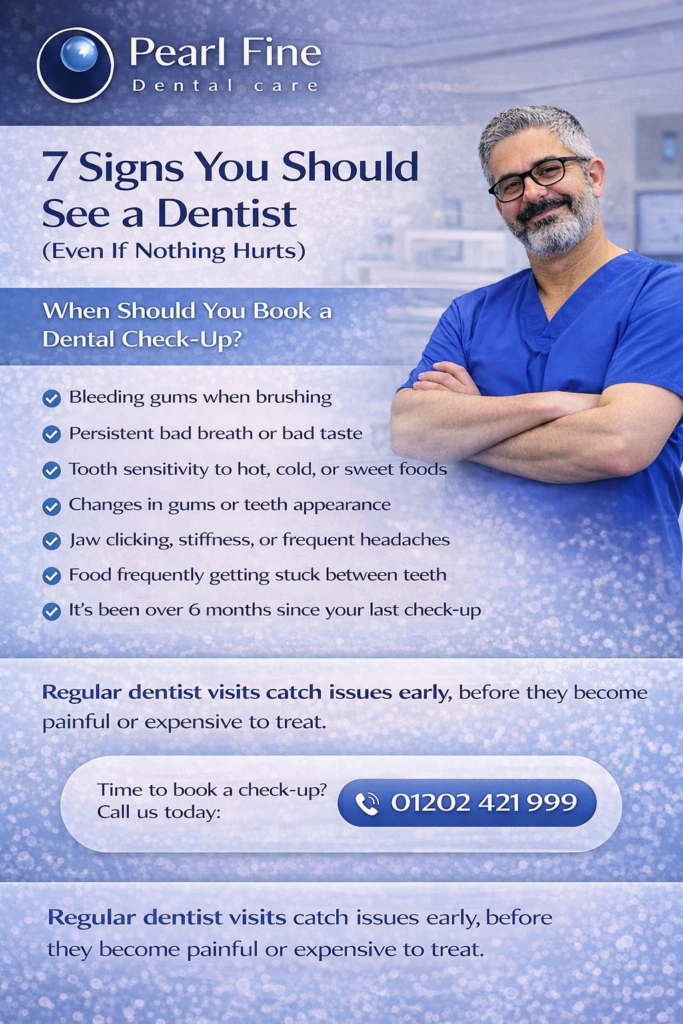
Most people only book a dental appointment when something hurts. The problem? By the time pain appears, the issue is often more advanced — and more expensive to treat.
Healthy teeth don’t always mean problem-free teeth.
In this article, we’ll break down seven common signs you should see a dentist, even if you’re not experiencing pain, and explain why early action matters for your long-term oral health.
1. Bleeding Gums When Brushing or Flossing
If your gums bleed regularly, it’s not normal — even if it doesn’t hurt.
Bleeding gums are often an early sign of:
- Gingivitis
- Gum inflammation
- Early-stage gum disease
At this stage, treatment is usually simple and non-invasive. Left untreated, it can progress into more serious gum disease that affects the bone supporting your teeth.
Key takeaway: Bleeding is an early warning sign, not something to ignore.
2. Persistent Bad Breath or a Bad Taste
Bad breath that doesn’t improve with brushing or mouthwash is often caused by bacteria below the gum line.
Common causes include:
- Gum disease
- Tooth decay
- Old restorations trapping bacteria
- Dry mouth
Because these issues often develop slowly, they may not cause pain right away — but they still require professional attention.
3. Sensitivity to Hot, Cold, or Sweet Foods
Tooth sensitivity is easy to dismiss, especially if it comes and goes. However, it can indicate:
- Enamel wear
- Receding gums
- Early decay
- Small cracks in teeth
Early assessment allows dentists to manage sensitivity before it turns into pain or requires more complex treatment.
4. Changes in Your Gums or Teeth Appearance
Subtle changes matter.
You should book a dental check-up if you notice:
- Gums pulling away from teeth
- Teeth appearing longer
- Swelling or redness in the gums
- Dark spots or discolouration on teeth
These changes often develop gradually, which is why they’re easy to overlook — but they rarely improve on their own.
5. Jaw Clicking, Stiffness, or Frequent Headaches
Jaw discomfort isn’t always a joint issue — it’s often linked to dental problems such as:
- Teeth grinding or clenching
- Bite misalignment
- TMJ dysfunction
These problems may not cause immediate pain in your teeth, but they can lead to headaches, facial tension, and long-term joint issues if ignored.
6. Food Frequently Getting Stuck Between Teeth
If food regularly gets trapped in the same place, it may indicate:
- A broken filling
- A cracked tooth
- Gum recession
- Tooth movement
These areas can become breeding grounds for bacteria, increasing the risk of decay and gum disease.
7. It’s Been Over Six Months Since Your Last Check-Up
Even if everything feels fine, skipping routine dental visits increases the risk of silent problems developing unnoticed.
Regular check-ups allow dentists to:
- Detect early decay
- Monitor gum health
- Identify wear, cracks, or bite issues
- Prevent small issues becoming major treatments
Preventive care is always simpler, quicker, and more cost-effective than reactive treatment.
Why Early Dental Visits Matter
Most dental problems are progressive. They don’t suddenly appear overnight — they develop slowly, often without pain.
Seeing a dentist early helps:
- Reduce treatment complexity
- Lower long-term costs
- Protect natural teeth
- Maintain overall oral health
Pain is a late-stage symptom, not an early indicator.
If something feels “slightly off” — even without pain — it’s worth having it checked.
Early dental visits aren’t about finding problems; they’re about preventing them.
If you’re unsure whether you need to see a dentist, that uncertainty alone is usually reason enough to book a check-up.