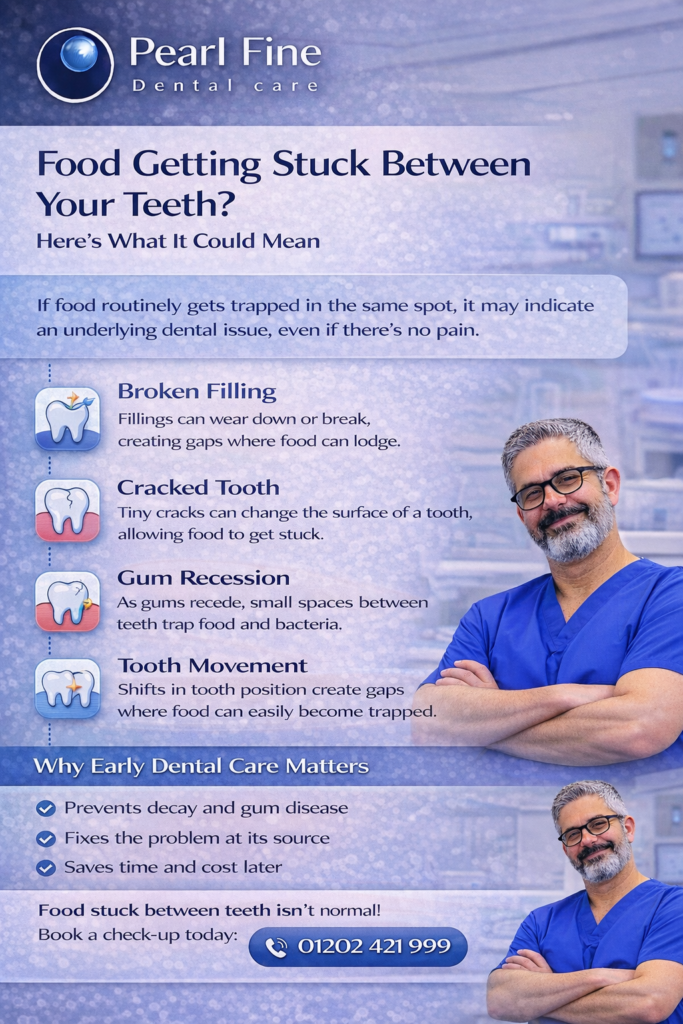
If food keeps getting stuck between the same teeth, it’s easy to brush it off as annoying but harmless.
In reality, repeated food trapping is often an early warning sign of an underlying dental issue — even when there’s no pain.
In this guide, we’ll explain why food gets stuck between teeth, what it usually means, and when it’s time to see a dentist, especially if you’re based in Southbourne or the Bournemouth area.
Why Food Keeps Getting Stuck Between Teeth
Healthy teeth fit together tightly. When that natural contact point changes, gaps form — and food starts to lodge where it shouldn’t.
These changes often happen gradually, which is why many patients don’t notice a problem until it becomes consistent.
Common Reasons Food Gets Trapped Between Teeth
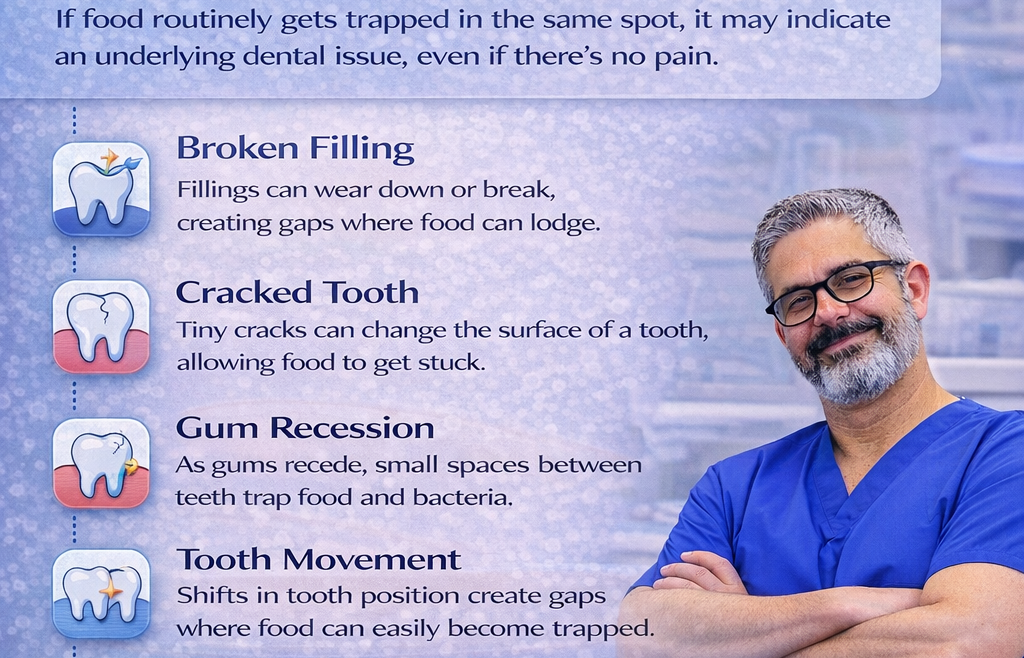
1. A Broken or Worn Filling
Fillings can wear down, crack, or loosen over time. When this happens, the shape of the tooth changes slightly, creating a space where food can collect.
This is one of the most common causes of repeated food trapping — and it often happens without pain.
2. A Cracked Tooth
Small cracks aren’t always visible and don’t always hurt. But even a hairline crack can change how food moves across your teeth.
If left untreated, cracks can worsen and eventually require more advanced treatment.
3. Gum Recession
When gums recede, the spaces between the teeth and gums become exposed. These areas are perfect for food and bacteria to settle.
Gum recession is often linked to:
- Early gum disease
- Teeth grinding
- Aggressive brushing
Internal link suggestion:
Link to Gum Disease Treatment or Dental Hygiene page.
4. Tooth Movement
Teeth can shift over time due to:
- Missing teeth
- Bite changes
- Grinding or clenching
- Natural ageing
Even small movements can open gaps that weren’t there before, causing food to lodge repeatedly in the same area.
Why Ignoring Food Trapping Can Lead to Bigger Problems
When food remains trapped, bacteria thrive.
Over time, this increases the risk of:
- Tooth decay
- Gum inflammation
- Persistent bad breath
- Gum disease
- Infection beneath the gum line
Because these issues often develop silently, pain is usually a late symptom.
What You Can Do Right Now
While a dental check-up is essential, these steps can help reduce risk:
- Floss daily, focusing on the problem area
- Use interdental brushes if advised
- Avoid using sharp objects like toothpicks
- Don’t force floss into tight spaces
These are short-term measures — not permanent solutions.
When to See a Dentist in Southbourne, Bournemouth
If food gets stuck in the same place regularly, it’s time to book a dental appointment.
A dentist can:
- Identify the exact cause
- Repair or replace worn fillings
- Treat early decay or gum issues
- Prevent more serious problems later
Early treatment is almost always simpler, faster, and more cost-effective.
Food frequently getting stuck between your teeth isn’t just inconvenient — it’s often your mouth signalling that something has changed.
Addressing the issue early helps protect your teeth, gums, and long-term oral health.
If you’re unsure whether it’s serious, that uncertainty alone is a good reason to get it checked.
FAQs
Why does food keep getting stuck between the same teeth?
This usually indicates a change in tooth shape, gum position, or alignment, often caused by fillings, cracks, gum recession, or tooth movement.
Is food getting stuck between teeth a sign of decay?
It can be. Repeated food trapping increases bacterial build-up, which raises the risk of decay and gum disease.
Can flossing fix the problem permanently?
Flossing helps reduce risk but won’t fix structural issues like cracks, worn fillings, or tooth movement.
Should I see a dentist even if there’s no pain?
Yes. Many dental issues develop without pain and are easier to treat when caught early.