A Guide for Patients in Southbourne & Bournemouth
Wisdom teeth are the last set of molars to develop, usually appearing between the ages of 17 and 25. While some people never experience problems with them, many patients eventually require wisdom tooth removal due to discomfort, infection, or lack of space in the mouth.
At Pearl Fine Dental Care in Southbourne, the focus is always on protecting long-term oral health while ensuring every patient feels comfortable and informed throughout treatment.
Understanding when wisdom teeth need to be removed can help you avoid serious dental complications later.
Let’s break it down.
What Are Wisdom Teeth?
Wisdom teeth are also known as third molars. They sit at the very back of your mouth and are the final teeth to emerge.
For some people, wisdom teeth grow normally and function just like other teeth. But for many patients, there simply isn’t enough room in the jaw for these extra molars.
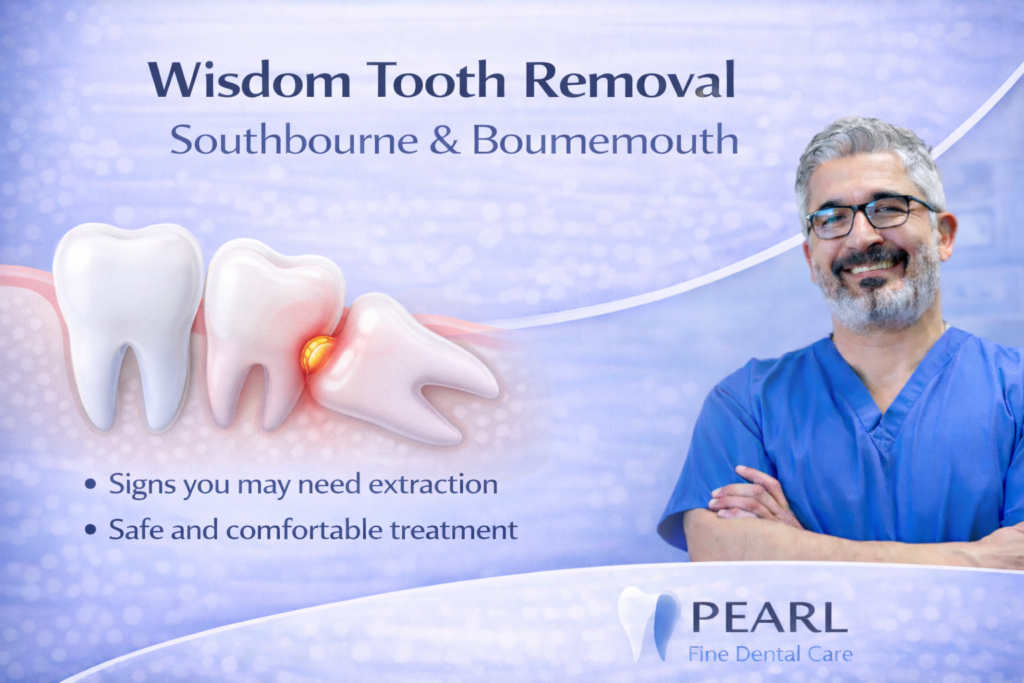
When this happens, wisdom teeth can become:
- Impacted (trapped beneath the gums or bone)
- Partially erupted
- Crooked or misaligned
- Difficult to clean
These issues can lead to infection, swelling, decay, and damage to neighbouring teeth.
Signs Your Wisdom Teeth May Need Removing
Not every wisdom tooth needs to be removed. However, there are several symptoms that may indicate a problem.
1. Pain at the Back of Your Mouth
One of the most common warning signs is pressure or discomfort around the wisdom tooth area.
This pain may start mild but gradually worsen over time.
2. Swollen or Inflamed Gums
If bacteria collect around partially erupted wisdom teeth, the gums may become:
- Red
- Tender
- Swollen
In some cases, infection may develop.
3. Jaw Stiffness
Impacted wisdom teeth can create pressure in the jaw, making it difficult to fully open your mouth.
4. Frequent Infections
Food particles and bacteria easily become trapped around wisdom teeth, especially if they are partially erupted.
This can lead to repeated infections and unpleasant breath.
5. Crowding of Other Teeth
Wisdom teeth pushing forward may affect the alignment of nearby teeth.
If you notice any of these symptoms, it’s important to book a dental examination.
Why Wisdom Teeth Often Need to Be Removed
Dentists typically recommend removing wisdom teeth when they pose a risk to your oral health.
Here are the most common reasons.
Lack of Space
Modern jaws are often too small to accommodate additional molars.
Impacted Teeth
Wisdom teeth may grow sideways or remain trapped beneath the gum.
Increased Risk of Infection
Partially erupted wisdom teeth create pockets where bacteria can grow.
Damage to Nearby Teeth
Pressure from wisdom teeth can harm neighbouring molars.
Tooth Decay and Gum Disease
Because wisdom teeth are difficult to clean, they are more likely to develop cavities and gum problems.
Removing them early often prevents more complex issues later.
What Happens During Wisdom Tooth Removal?
Many patients feel anxious about tooth extraction. However, modern dental techniques make the process much more comfortable than people expect.
Here is what typically happens.
Step 1: Examination and X-rays
Your dentist will assess your mouth and take digital X-rays to understand the position of your wisdom teeth.
Step 2: Local Anaesthetic
The area is carefully numbed so you do not feel pain during the procedure.
Step 3: Tooth Removal
The dentist gently loosens the tooth and removes it. In some cases, the tooth may be divided into smaller pieces to make removal easier.
Step 4: Aftercare Guidance
After the procedure, you will receive instructions to help the area heal quickly and safely.
Most wisdom tooth extractions take around 30–60 minutes depending on complexity.
Recovery After Wisdom Tooth Extraction
Healing after wisdom tooth removal is usually straightforward.
Most patients recover within a few days.
To support recovery, dentists recommend:
- Resting for the first 24 hours
- Eating soft foods
- Keeping the area clean
- Avoiding smoking while healing
- Following all aftercare instructions
Some swelling and mild discomfort are normal during the first few days.
When Should You See a Dentist?
If you experience any of the following symptoms, it’s best to book a dental appointment:
- Persistent pain at the back of your mouth
- Swollen or bleeding gums
- Difficulty opening your jaw
- Repeated infections
- Bad taste or unpleasant breath
Early assessment allows your dentist to identify problems before they become more serious.
Wisdom Tooth Care at Pearl Fine Dental Care
At Pearl Fine Dental Care in Southbourne, the focus is always on gentle, patient-focused dentistry.
Every patient receives a personalised treatment plan designed to protect long-term oral health.
Regular dental check-ups help monitor wisdom teeth and identify potential issues early.
If removal is required, modern dental techniques ensure the procedure is safe, comfortable, and effective.
Book a Consultation
If you are experiencing wisdom tooth pain or have concerns about your oral health, booking a consultation is the best next step.
Professional advice ensures potential problems are treated early and your smile stays healthy for years to come.