A Practical Guide for Patients in Southbourne & Bournemouth
Dental emergencies rarely happen at a convenient time.
Whether it’s sudden tooth pain, a broken tooth, or swelling, the experience can be stressful and uncomfortable. Knowing what to do — and when to act — can make a significant difference to both your comfort and the outcome of your treatment.
This guide explains what counts as a dental emergency, how to manage symptoms before your appointment, and what to expect when you arrive at a dental practice.
What Counts as a Dental Emergency?
Not every dental issue requires urgent care, but some situations should be treated as a priority.
Here are the most common dental emergencies.
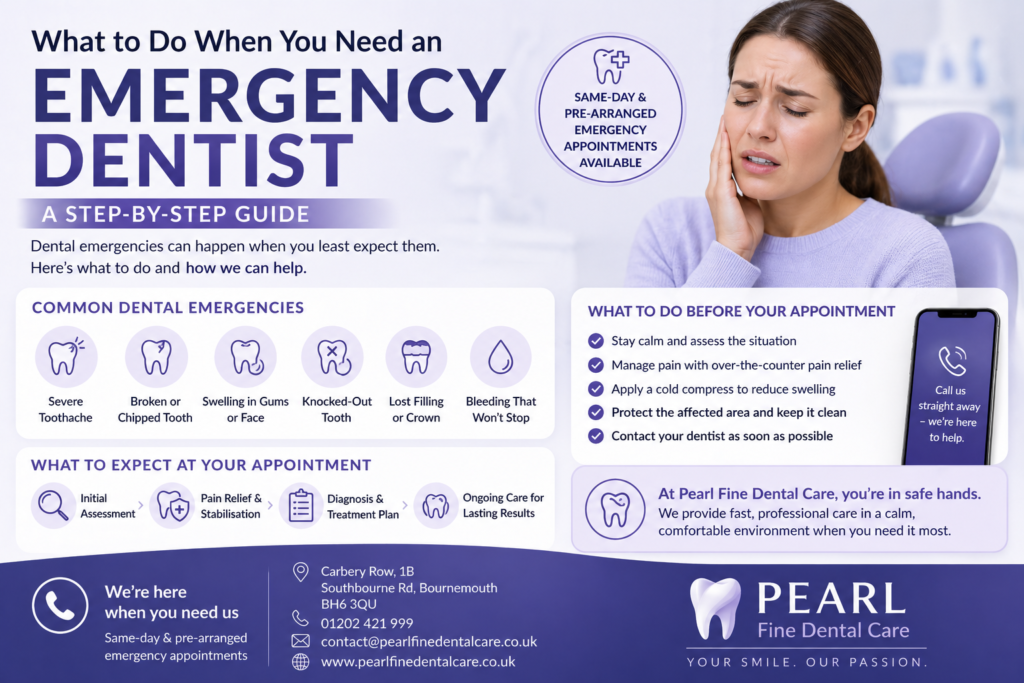
Severe Toothache
Persistent or intense tooth pain is often a sign of infection or decay that requires prompt treatment.
Swelling in the Gums or Face
Swelling can indicate an infection and should not be ignored, especially if it is spreading or causing discomfort.
Broken or Chipped Tooth
Damage to a tooth can expose sensitive areas and increase the risk of further complications.
Knocked-Out Tooth
This is one of the most urgent dental situations. Acting quickly can improve the chances of saving the tooth.
Lost Filling or Crown
While not always painful, this leaves the tooth vulnerable and should be addressed as soon as possible.
Bleeding That Won’t Stop
Uncontrolled bleeding after injury or dental work requires immediate attention.
When Is It Urgent?
A simple way to decide if you need an emergency dentist is to ask:
- Is the pain severe or worsening?
- Is there swelling or signs of infection?
- Has a tooth been damaged or knocked out?
- Is it affecting your ability to eat, speak, or sleep?
If the answer is yes to any of these, you should seek urgent dental care.
Step-by-Step: What to Do Before Your Appointment
Taking the right steps before you see a dentist can reduce pain and prevent the situation from getting worse.
Step 1: Stay Calm and Assess the Situation
Panic can make symptoms feel worse. Take a moment to understand what has happened.
Step 2: Manage Pain Safely
You can take over-the-counter pain relief if needed, following the recommended dosage.
Avoid placing aspirin directly on the gums, as this can cause irritation.
Step 3: Reduce Swelling
Apply a cold compress to the outside of your cheek near the affected area.
This can help control swelling and provide relief.
Step 4: Protect the Tooth
If a tooth is broken or chipped:
- Rinse your mouth gently with warm water
- Avoid chewing on that side
- Keep the area clean
If a tooth has been knocked out:
- Hold it by the crown, not the root
- Rinse it gently if dirty
- Try to place it back in the socket if possible
- If not, store it in milk or saliva and seek immediate care
Step 5: Contact a Dentist Immediately
The sooner you get professional care, the better the outcome.
Private practices are often able to offer faster access to treatment, especially for urgent cases.
What to Expect at Your Emergency Appointment
Knowing what happens next can help reduce anxiety.
Here’s what typically happens when you arrive.
Initial Assessment
Your dentist will examine the affected area and may take X-rays to understand the cause of the problem.
Diagnosis and Pain Relief
The immediate priority is to relieve pain and stabilise the situation.
This may involve:
- Temporary treatment
- Prescribing medication if necessary
- Addressing infection
Treatment Plan
Once the immediate issue is under control, your dentist will explain the next steps.
This could include:
- A filling or crown
- Root canal treatment
- Tooth repair or replacement
You’ll be given clear options so you can make an informed decision.
How Pearl Fine Dental Care Supports Emergency Patients
When you’re dealing with a dental emergency, speed and reassurance matter.
At Pearl Fine Dental Care in Southbourne, patients across Bournemouth benefit from a calm, organised approach to urgent care.
The practice offers:
- Same-day emergency appointments where possible
- Pre-arranged emergency slots to accommodate urgent cases
- A patient-focused environment designed to reduce stress
- Clear communication at every stage of treatment
This ensures patients receive prompt attention without feeling rushed or overwhelmed.
Why Acting Quickly Matters
Delaying treatment can lead to:
- Increased pain
- Spread of infection
- More complex and costly procedures
Early intervention often means simpler, more effective treatment.
Preventing Future Dental Emergencies
While not all emergencies can be avoided, there are steps you can take to reduce your risk.
Attend Regular Check-Ups
Routine visits help identify problems early before they become urgent.
Maintain Good Oral Hygiene
Brushing, flossing, and professional cleaning all contribute to long-term dental health.
Avoid Hard Foods
Biting down on hard foods can increase the risk of chipped or broken teeth.
Wear Protection During Sports
A mouthguard can prevent injury during physical activity.
Book an Emergency Appointment
If you are experiencing dental pain or suspect an emergency, seeking professional care should be your priority.
Pearl Fine Dental Care in Southbourne provides prompt, professional support for patients across Bournemouth, with same-day and pre-arranged emergency appointments available.
Dental emergencies can feel overwhelming, but knowing what to do makes a significant difference.
By recognising the signs, managing symptoms early, and seeking professional care quickly, you can protect your oral health and reduce discomfort.
Having access to a trusted local dental practice ensures you are never left dealing with these situations alone.